Canada's September 8 Retaliation Cannot Be Read From the U.S. List
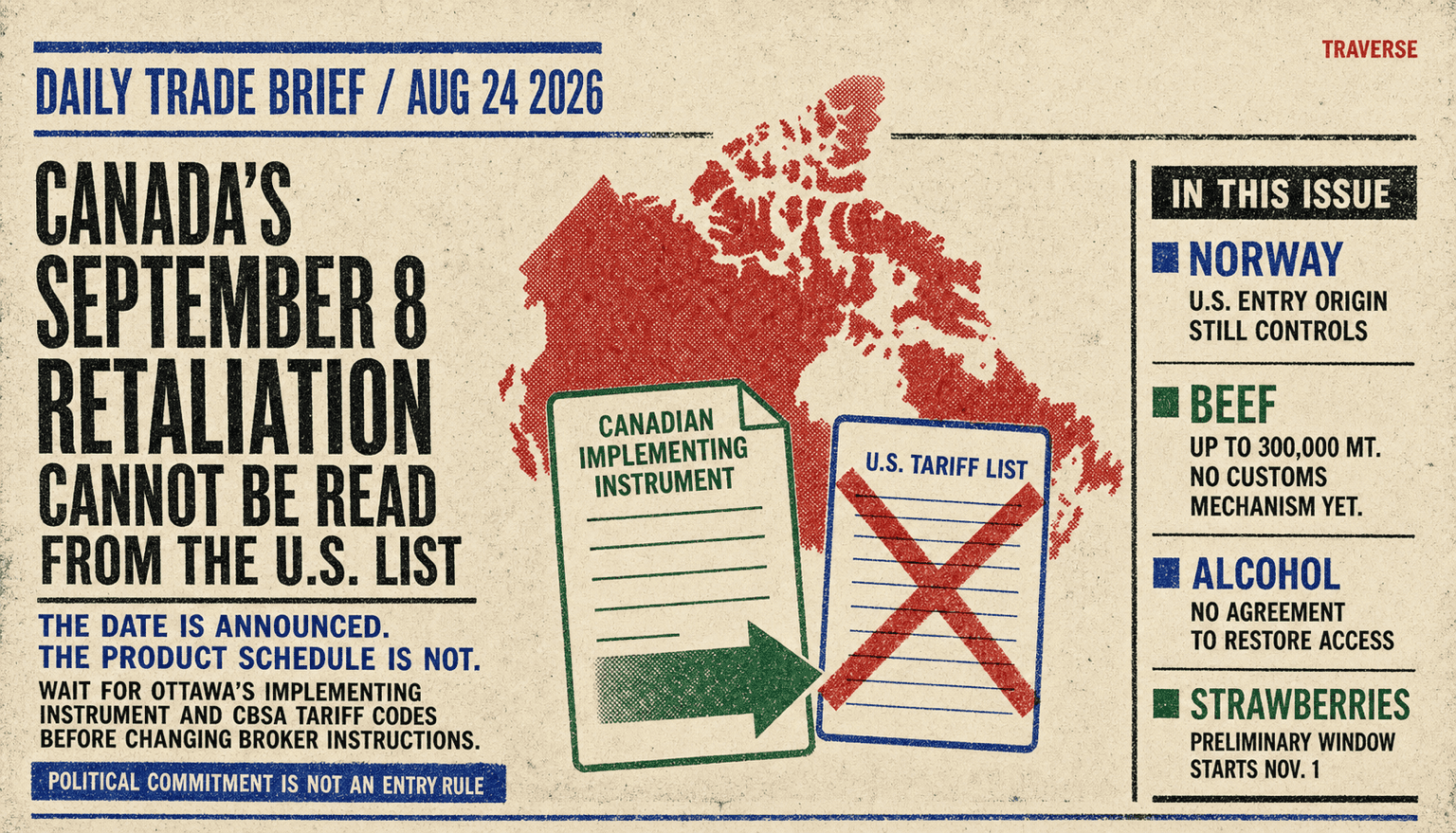
Canada's September 8 announcement is a preparation clock, not a published product rule. Hold broker coding changes until Ottawa's implementing instrument and Canadian tariff items exist, and keep the other four files separated by their own entry facts.
Canada has announced that dollar-for-dollar countertariffs will take effect September 8, but Ottawa has not yet published the product schedule or implementing instrument that would identify covered Canadian tariff items. The U.S. tariff list cannot supply those fields. That is the week's hardest preparation clock. The other four developments turn on different origin tests, missing instruments, provincial access decisions, and a preliminary seasonal scope date.
Canada's dollar-for-dollar pledge is a political commitment, not a product-level entry rule. Until Ottawa publishes the implementing instrument and corresponding CBSA tariff items, brokers cannot identify the covered Canadian classifications from the U.S. list. Reconcile the Canadian schedule against shipment-level classifications as soon as it appears, and do not change surtax coding or duty instructions from the U.S. list alone.
Read the full analysis: Canada's Retaliatory Tariffs Cannot Be Read From the U.S. List.
Norway's planned EEA-aligned forced-labor ban can change Norwegian import controls without changing U.S. customs origin for the same product. A Norwegian law change does not automatically alter the country of origin declared at U.S. entry, so Chapter 99 treatment cannot be changed on that basis alone. Make a separate, entry-specific origin determination before changing broker instructions.