Forced-labor appeal divergence leads a day of compliance housekeeping
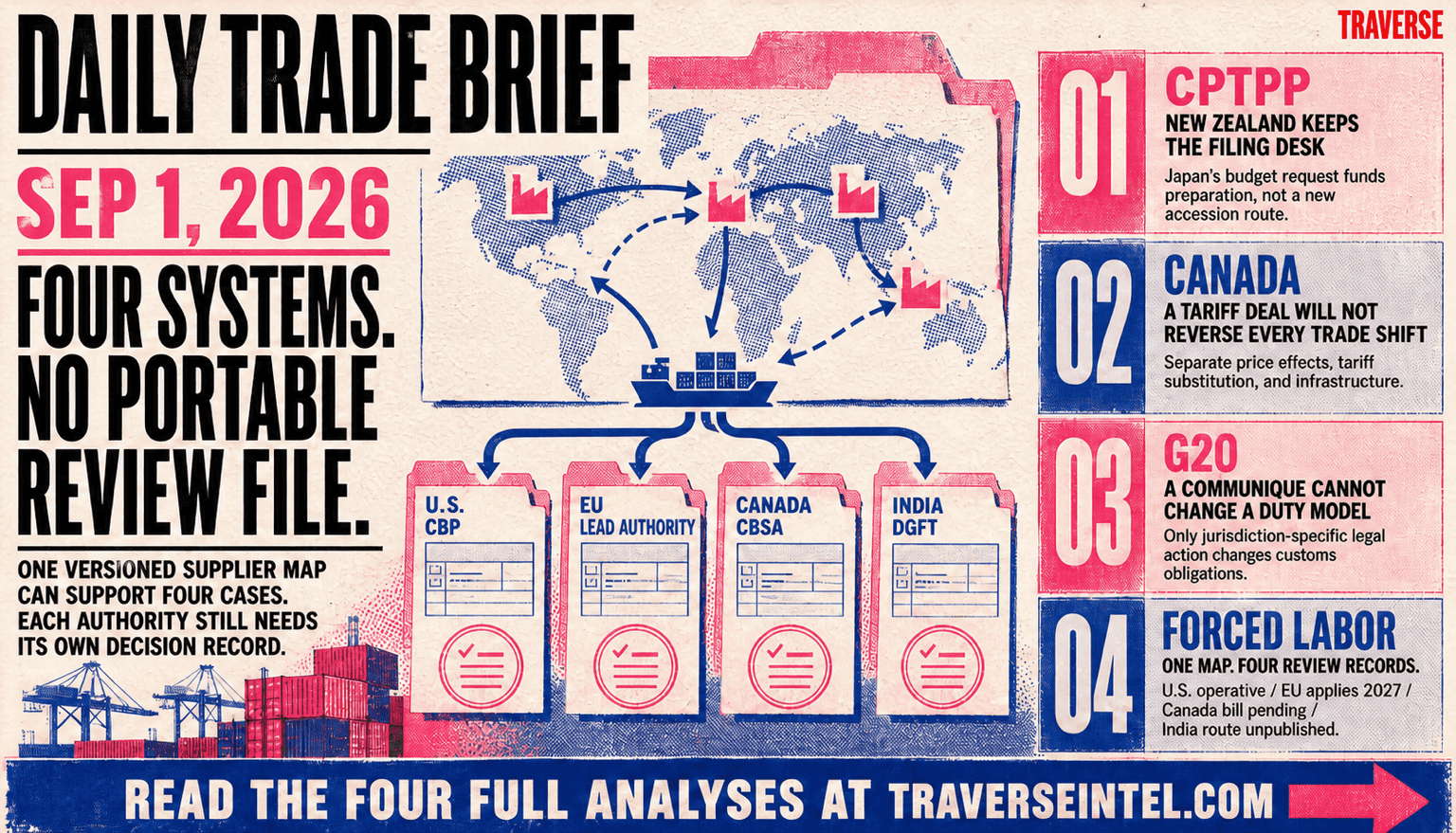
Four active forced-labor regimes sharing no common appeal process is the compliance exposure most likely to catch importers flat-footed this quarter.
Forced-labor import bans are now active across the U.S., EU, Canada, and India, but each jurisdiction runs a separate decision process with its own deadlines and review record - meaning a single supplier remediation does not satisfy all four authorities at once.
Japan has submitted a budget request to fund CPTPP secretariat preparations, but the operational structure is unchanged: New Zealand still receives accession filings, and consensus among current members still controls any approval. The budget request signals Japanese institutional intent but does not alter the accession timeline or filing requirements for any party watching the agreement's membership track.
Read the full analysis: Japan’s CPTPP Secretariat Budget Request Does Not Move the Filing Desk.
Canada's trade diversification reflects price effects, tariff substitution, and new infrastructure built during the tariff period - not a single reversible decision. A bilateral tariff deal would not automatically unwind those shifts. U.S. manufacturers planning market-recovery investment should disaggregate the three drivers before committing capital, because the infrastructure and substitution components are unlikely to reverse on deal signing alone.
Read the full analysis: .