H.R. 10229 would void the 300,000-MT beef quota increase and restrict future tariff relief
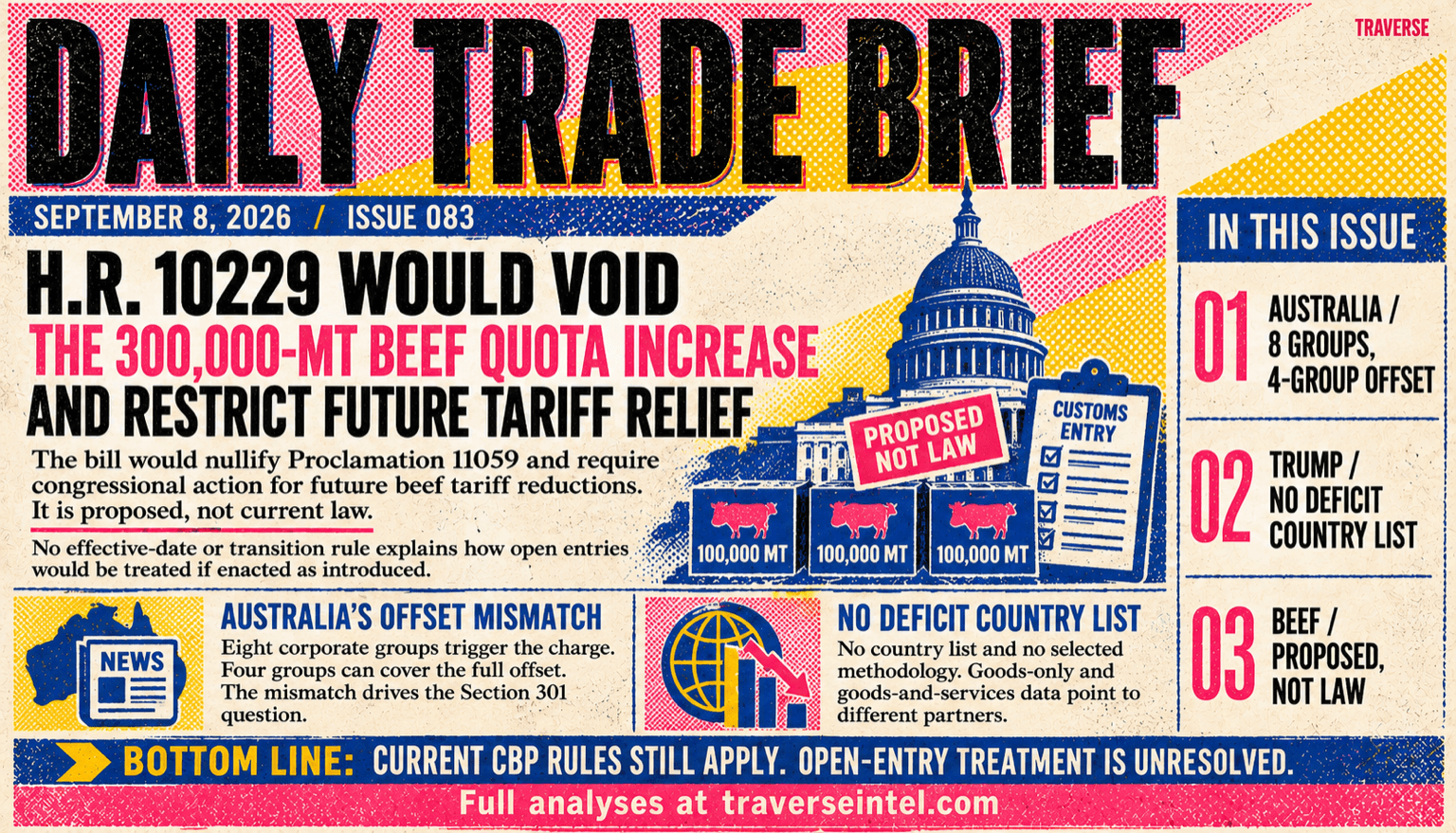
H.R. 10229 has no current effect on Proclamation 11059 or CBP entry rules. If enacted as introduced, it would nullify the quota increase without explaining how to treat open entries. Importers should follow current CBP instructions and monitor any transition language or clarification of Section 404 before changing entry plans.
H.R. 10229 would nullify Proclamation 11059, which added 300,000 metric tons to the in-quota quantity for certain lean beef trimmings. It would also condition future beef tariff reductions on congressional action. The bill has no effective-date or transition provision for entries made under the proclamation before enactment, so the treatment of open entries would remain unresolved if it is enacted as introduced.
Australia's news bargaining charge requires eligible expenditure across eight corporate groups, but four groups can cover the full offset - a structural gap that carries Section 301 implications. The mismatch between the eight-group threshold and the four-group coverage path is the operative compliance question, not the headline charge rate. U.S. digital platforms and trade counsel monitoring Section 301 exposure should track how Australian regulators apply the offset rule in practice.
Read the full analysis: Australia's News Bargaining Charge Needs Eight Groups but Four Can Cover the Offset.
Trump's threat to stop trading with deficit countries names no specific countries and no current U.S. order has selected a methodology for identifying them. Goods-only and goods-and-services trade data produce materially different lists, so the threat cannot be mapped to a concrete set of trading partners yet. Sourcing teams and trade counsel should treat this as directional political signaling rather than an actionable order.