Ecuador copper traceability and Korea's $200B repayment terms
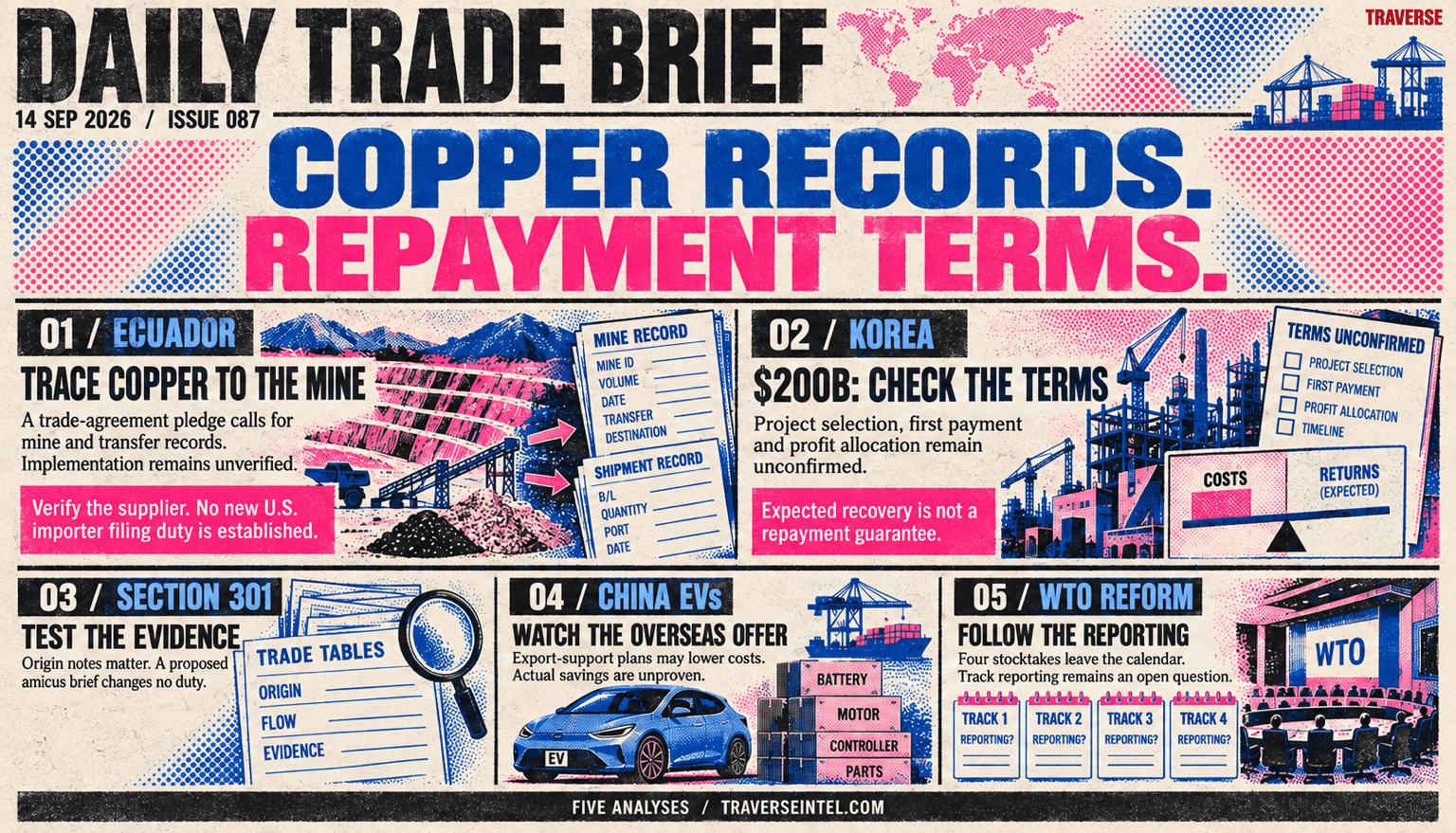
Test an Ecuadorian copper offer against verifiable mine and transfer records. For a Korea-backed project, base funding assumptions on agreed distribution terms and executed project documents.
Friday's five analyses range from copper supply records and investment cash flows to tariff evidence, overseas EV offers and WTO reporting. Each linked article sets out the supporting record and the limits of its conclusion.
Ecuador's trade agreement commits it to tracking copper through extraction, transport, processing and export, with electronic receipts identifying the seller, extraction operation and mining authorization. The record reviewed for Friday's analysis did not establish the agreement's entry-into-force date or full operation of that system. Buyers can use these details to test whether offered volumes can be traced to a named mine. The pledge supplies a supplier-verification benchmark, without establishing a new U.S. importer filing obligation.
Read the full analysis: Ecuador's Copper Push Makes Mine Records a Sourcing Priority.
The first project under Korea's $200 billion U.S. investment framework will test how project earnings reach Korea and support expected recovery of principal and interest. The ministry's statements cited in Friday's analysis left the project, first payment and profit-distribution terms unconfirmed. Sponsors need agreed allocation terms and executed funding documents before relying on the pledge in a project budget. They should also check whether approval rests on the ordinary commercial test or a strategic exception. Expected recovery is not a repayment guarantee.