Mexico's screening bill would add a silence-as-denial closing risk
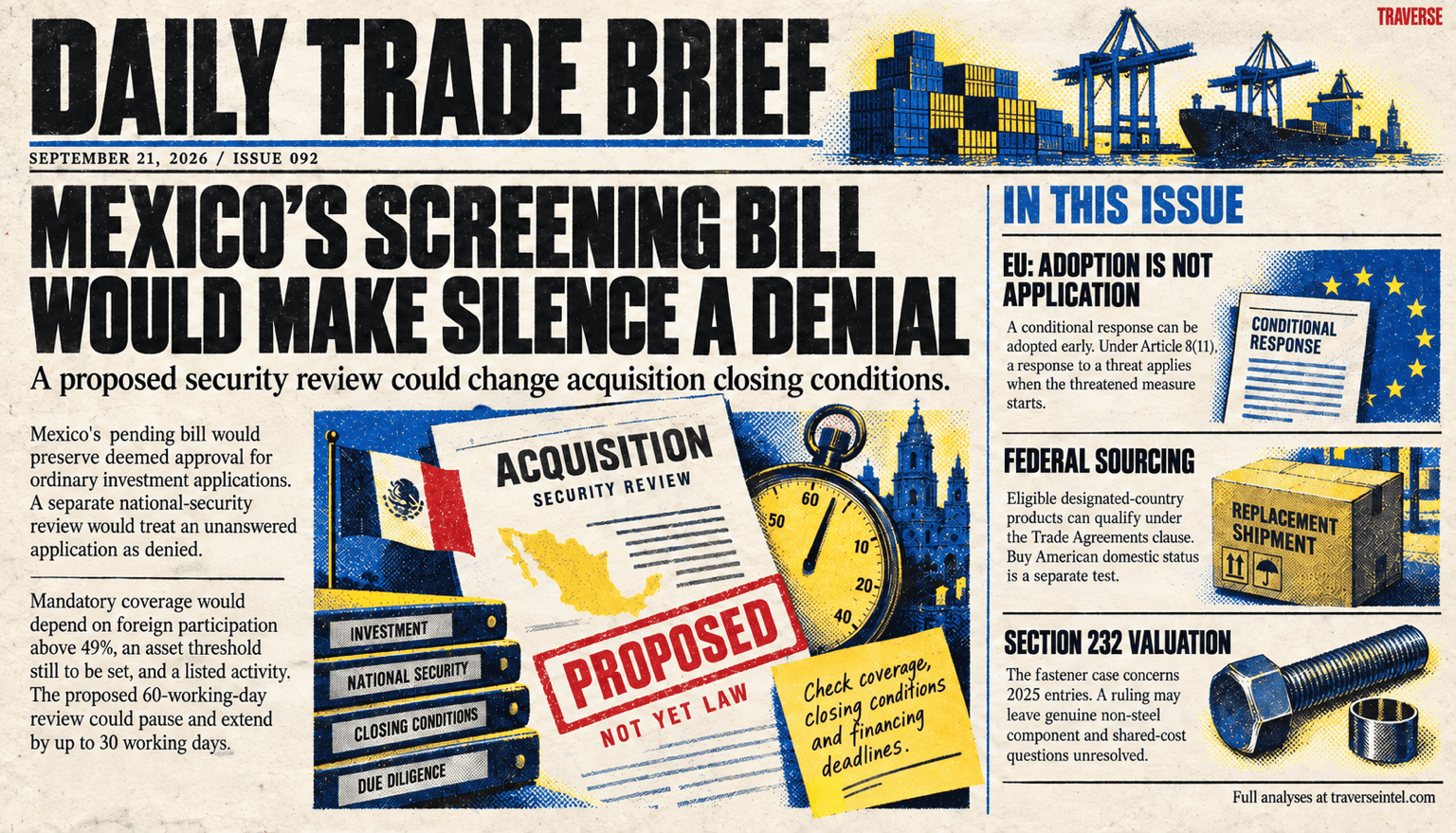
Mexico's proposed security procedure would change acquisition clearance, while an EU response to a threat could be adopted before its application date. Review closing and sales commitments against those conditions. Federal replacement purchases depend on contract-specific eligibility, and the fastener case concerns historical entries rather than a new rule for current shipments.
Mexico's proposed security review would change what an unanswered filing means for a covered acquisition. The other analyses cover the timing of an EU response to U.S. pressure, replacement products in federal procurement, and the limits of a pending steel-valuation case.
Mexico's pending bill would preserve deemed approval for ordinary investment applications while treating silence as denial under a separate national-security procedure. Mandatory review would require foreign participation above 49 percent, target assets above a threshold still to be set, and a listed economic activity. The proposed 60-working-day period could pause for information and extend by up to 30 working days. Before setting closing conditions or financing deadlines, counsel should test the acquisition's coverage and monitor enactment and transition rules. The proposal is not yet law.
Read the full analysis: Mexico's Investment Screening Bill Would Make Silence a Denial.
The EU's Anti-Coercion Instrument permits a conditional response to be adopted before a threatened U.S. restriction starts, if the required findings and procedural steps are completed. Under Article 8(11), a response to a threat applies from the date the threatened measure is actually applied. Exporters therefore cannot assume a fresh EU preparation period will follow U.S. action. Trump's Canada-EU warning does not itself establish economic coercion of the EU. Review European sales contracts for duty allocation, price changes and delivery commitments while monitoring any formal EU proceeding.