New Foreign Supply Can End the BIS Legacy Exclusion for Chinese Vehicle Code
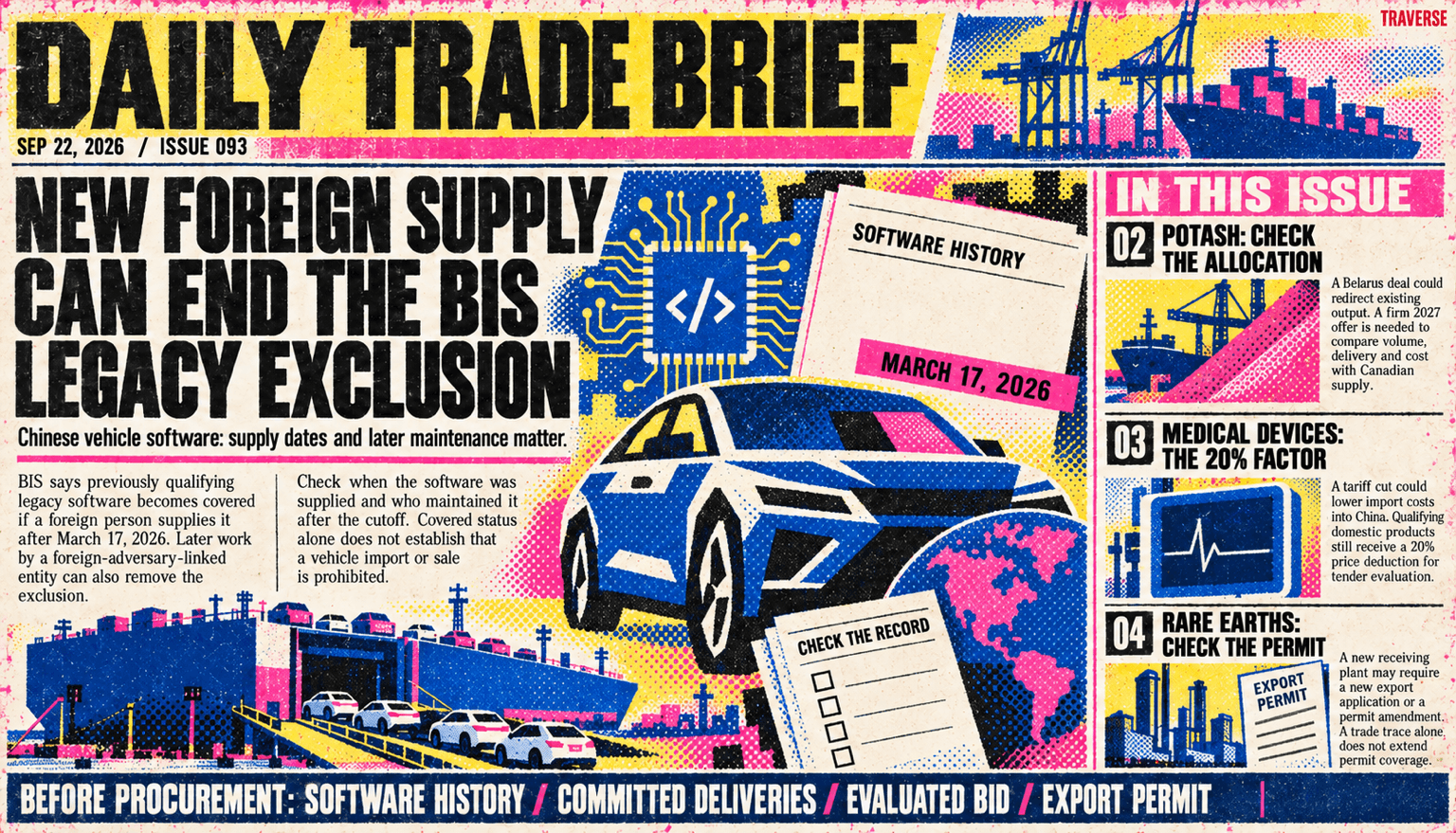
Check the software history, committed potash deliveries, evaluated device bid and export-permit coverage before changing the procurement plan.
Before a U.S. automaker commits to Chinese-developed connectivity or automated-driving code, the supply and maintenance history needs review. The other decisions below concern a competing potash offer, medical-device tender pricing and permission to supply a manufacturer's new plant.
BIS says previously qualifying legacy software becomes covered if a foreign person supplies it after March 17, 2026. Later maintenance, augmentation or alteration by a foreign-adversary-linked entity can also remove the exclusion. Establish the component's supply dates and who worked on it after the cutoff before relying on legacy treatment. Covered status alone does not establish that a vehicle import or sale is prohibited.
Read the full analysis: Old Chinese Vehicle Software Can Lose Its U.S. Legacy Exclusion.
A Belarus potash deal could redirect existing output to U.S. buyers without increasing world production. Additional supply would need separate evidence, such as higher utilization or released inventory. For a 2027 contract, compare a firm allocation's volume, product specification, delivery window and delivered cost with the Canadian offer. A purchase announcement does not establish replacement capacity.
Read the full analysis: .