Higher German Drug Prices Could Reduce Medicaid's Extra MFN Rebates
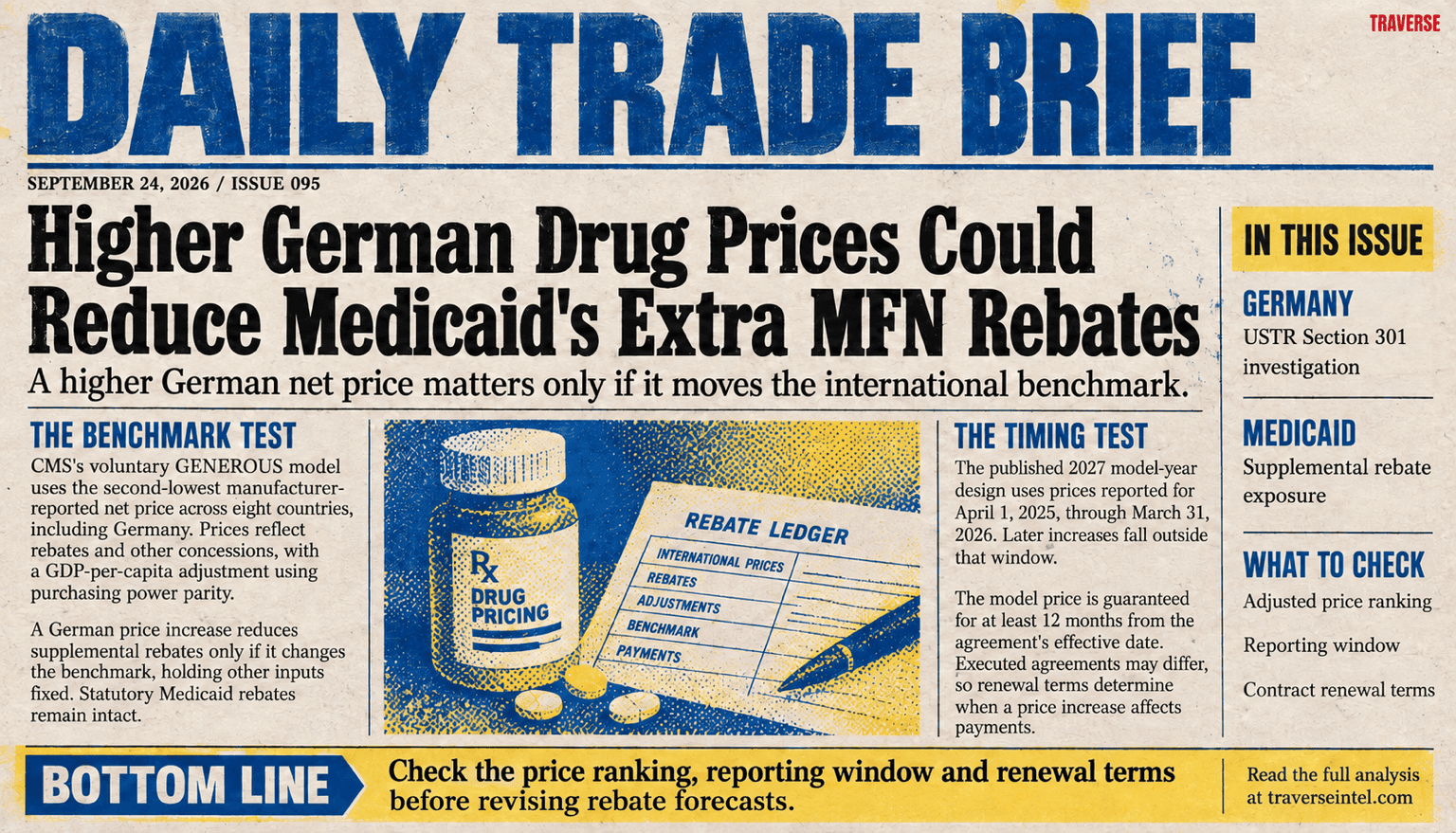
Medicaid rebate teams and participating manufacturers should check each drug's adjusted price ranking, reporting window and contract renewal terms before revising supplemental rebate projections.
USTR's Section 301 investigation into German drug pricing raises a question for U.S. savings forecasts: a concession that increases German manufacturer receipts could also reduce Medicaid's additional most-favored-nation (MFN) rebates.
CMS's voluntary GENEROUS model uses the second-lowest manufacturer-reported net price across eight countries, including Germany, after a GDP-per-capita adjustment using purchasing power parity. These prices reflect rebates, discounts and other concessions. A German increase matters only if it changes that second-lowest value. A price already above the benchmark can rise without moving it. Where a supplemental rebate is payable, a higher guaranteed net price reduces that rebate, holding other inputs fixed. Statutory Medicaid rebates remain intact.
Under the published design, 2027 model-year prices use data from April 1, 2025, through March 31, 2026. Later German increases fall outside that window. The model price is guaranteed for at least 12 months from the supplemental rebate agreement's effective date. Executed agreements may differ from the published design, so their renewal terms determine when an increase could affect payments.
Read the full analysis: Higher German Drug Prices Could Reduce Medicaid MFN Savings.