U.S.-China's 30-for-30 Lists Still Need Tariff Decisions
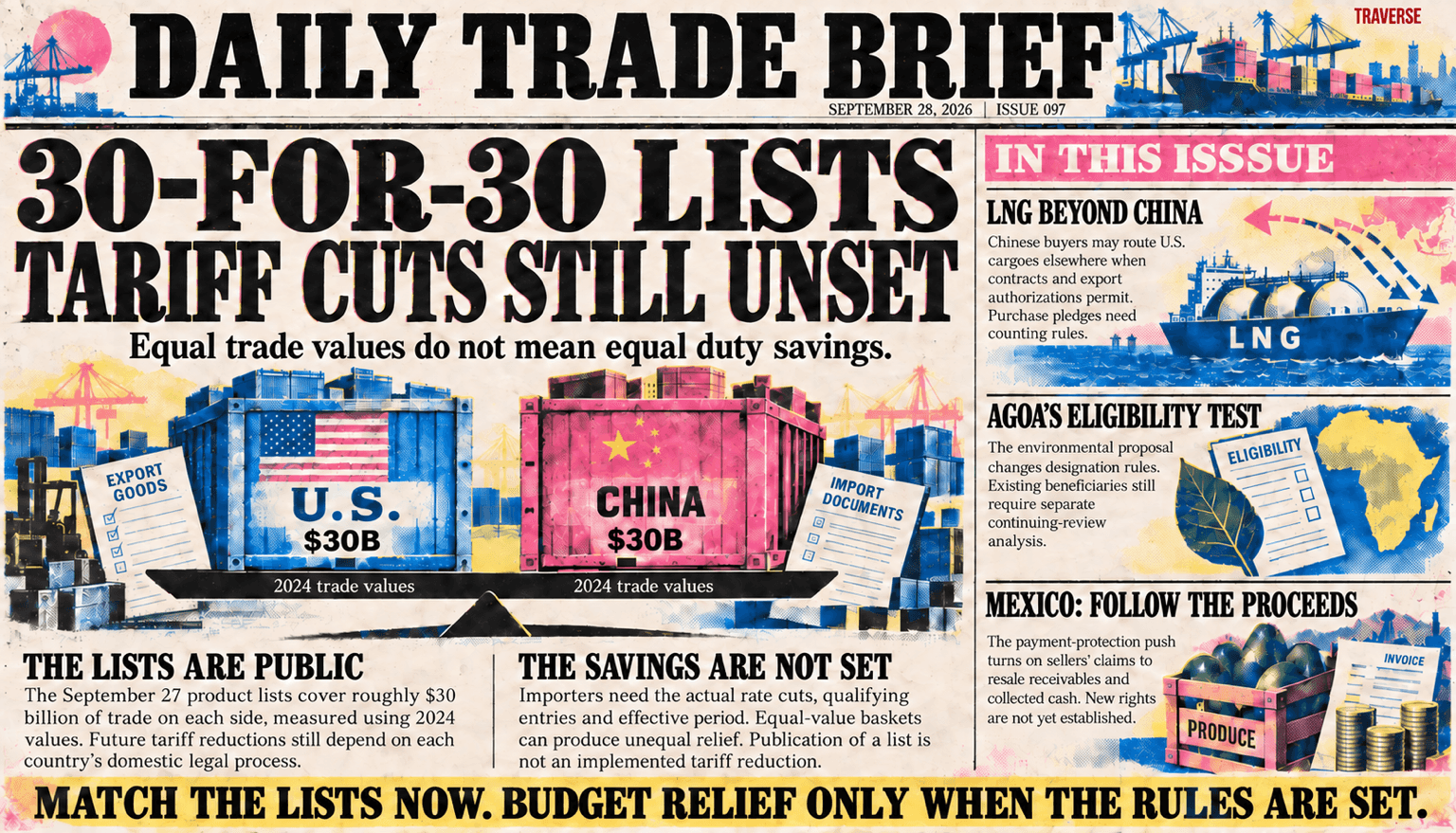
Match planned imports to the published lists now. Keep prospective savings separate from the base duty budget until implementing measures establish the rates, qualifying entries and effective period.
The U.S.-China product lists published September 27 identify goods covering roughly $30 billion of trade on each side. The agreed 30-for-30 terms of reference value those lists using 2024 annual bilateral trade and leave future tariff reductions to each country's domestic legal process. The new documents sharpen the tariff question examined in Friday's lead analysis.
Equal trade values can yield different duty savings. An importer's forecast must apply the actual rate reduction to its own qualifying customs value and entry period, accounting for existing relief and any expiry. Friday's analysis explains why the basket's headline value cannot substitute for that calculation.
Read the full analysis: U.S.-China Trade Deal Can Deliver Unequal Tariff Savings.
Chinese buyers can send U.S. LNG to third countries when their contracts and U.S. export authorizations permit it. China-bound shipment totals therefore cannot measure all Chinese purchases. Any LNG purchase pledge needs its own counting rules, including whether existing contracts qualify, before exporters can assess compliance or additional sales.