CIT asks which countries the forced-labor tariff case can cover
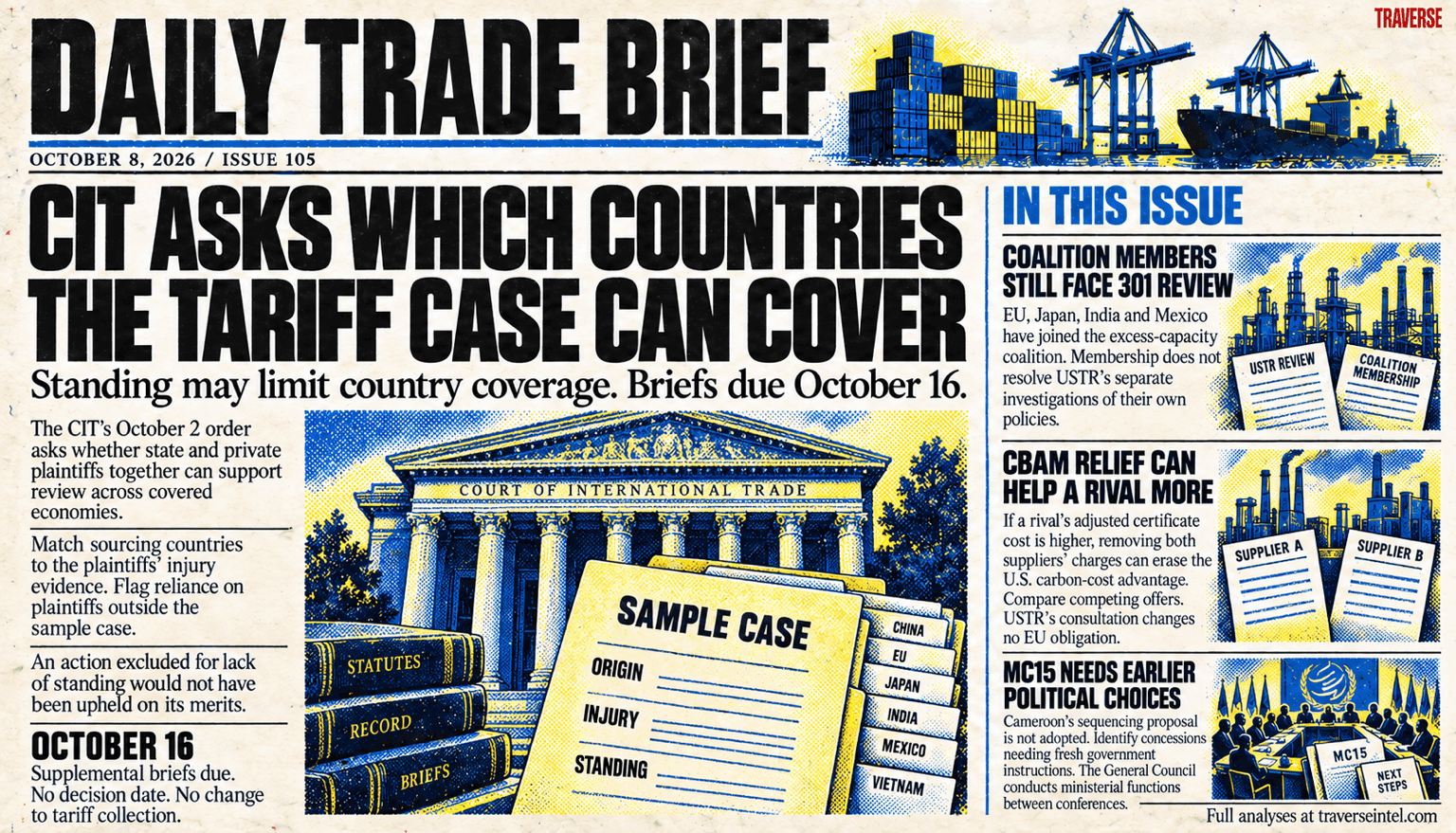
Importers should have counsel match sourcing countries to the plaintiffs' injury evidence and flag reliance on plaintiffs outside the sample case. Reassess coverage against the supplemental briefs due October 16 before assuming every country action will receive merits review.
The Court of International Trade's October 2 order puts country-specific standing before the parties alongside the dispute over USTR's statutory authority. It asks how far the forced-labor tariff sample proceeding can reach and requires supplemental briefs by October 16.
The court asks whether the states' standing can be considered alongside the private plaintiffs' and whether the combined plaintiffs can support review of every covered economy. Counsel should match a client's sourcing countries to the asserted injuries, flagging any reliance on plaintiffs outside the sample case. An action excluded for lack of standing would remain outside merits review in this proceeding, rather than be upheld as lawful. October 16 is a briefing deadline, not a decision date, and the order changes no tariff collection requirement.
Read the full analysis: Court Weighs States' Standing in Forced-Labor Tariff Case.
The EU, Japan, India and Mexico joined the excess-capacity coalition announced October 7 while their own policies remain subjects of USTR's separate Section 301 investigations. Membership establishes neither a country exemption nor an accepted resolution of the investigated practices. Sourcing teams should keep supplier-origin assessments tied to country-specific investigation evidence and any USTR determination. An investigation itself is not a finding of an actionable practice.