Tariff relief bill would make aid conditional on keeping U.S. production
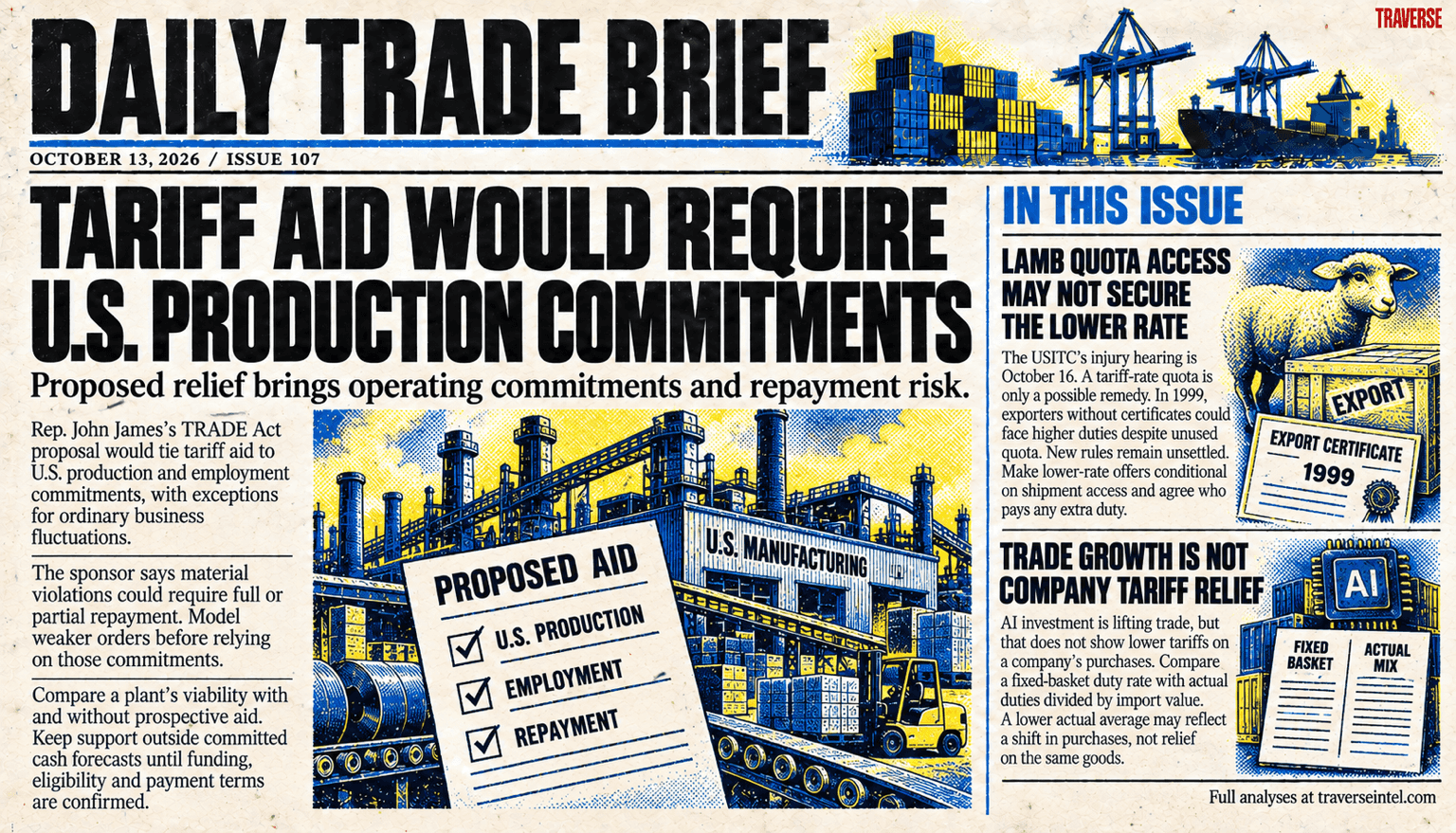
Manufacturing finance teams should compare a plant's viability with and without prospective aid, including the cost of meeting its conditions. Keep aid outside committed cash forecasts until funding, eligibility and payment terms are confirmed.
Rep. John James's tariff relief proposal could ease a manufacturer's cash shortage while making a later move abroad more costly. Aid would come with operating commitments and possible repayment.
Under the sponsor's description of the TRADE Act, businesses would need to demonstrate tariff-related harm and commit to U.S. production and employment, with exceptions for ordinary business fluctuations. Material violations could require full or partial repayment. Manufacturers should model weaker orders or a failed sourcing transition to see whether those commitments remain workable.
Read the full analysis: Tariff Relief Bill Would Tie Aid to U.S. Production Plans.
The USITC's lamb safeguard investigation reaches its injury hearing on October 16, with a tariff-rate quota still only a possible remedy. Under the 1999 safeguard, exporters without certificates could face the higher tariff even while their country's quota remained unfilled. That precedent does not establish the rules for any new measure. Buyers comparing forward offers should make lower-rate prices conditional on access for the specified product and quantity, and agree who pays any extra duty if access falls through.
Read the full analysis: .