Russian diesel license leaves tariff exposure open ahead of October 18
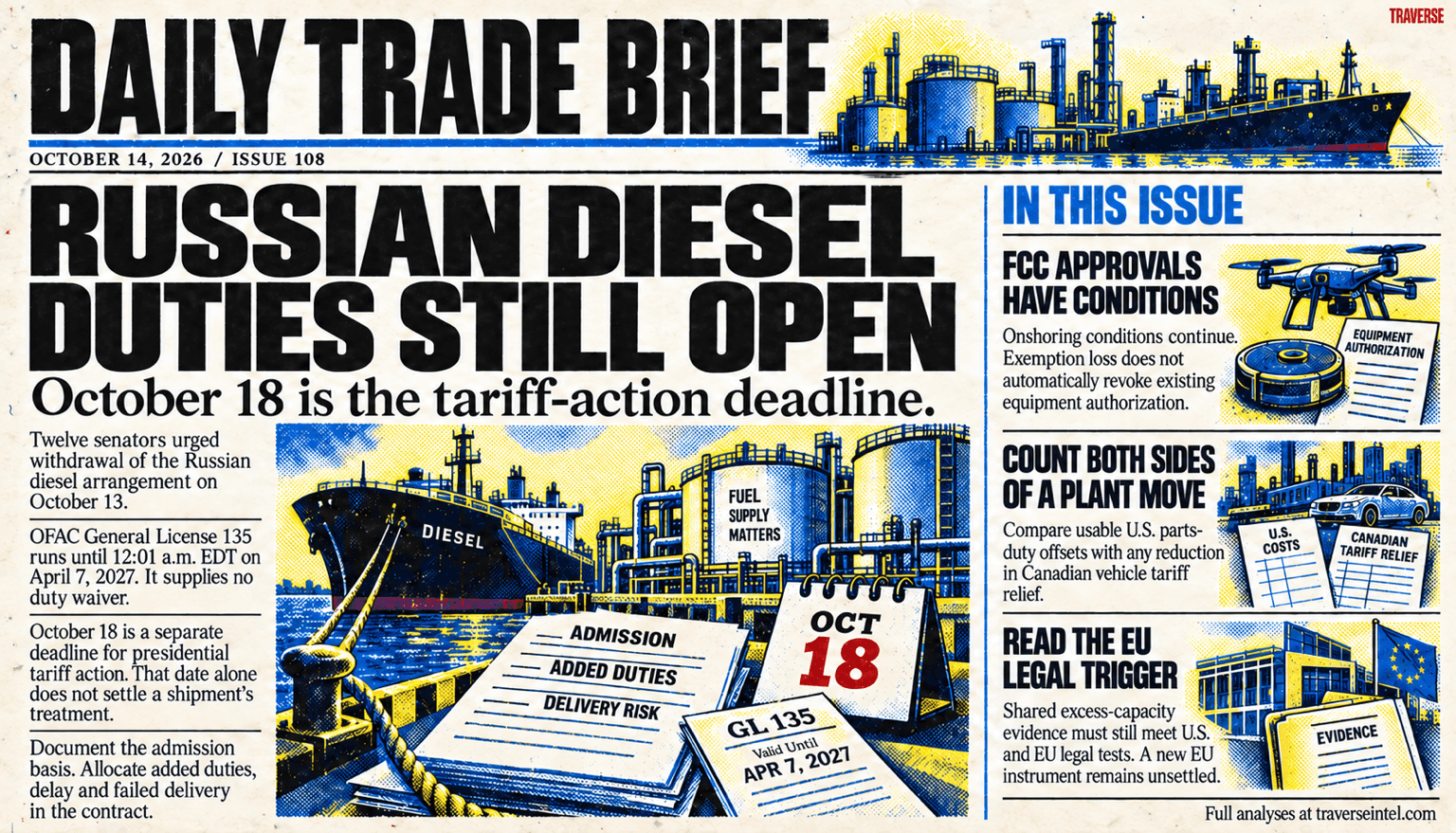
U.S. buyers considering Russian diesel should document the basis for U.S. admission and allocate additional duties, delays and failed delivery in the contract. Keep unresolved tariff treatment explicit, with agreed repricing or cancellation terms.
Twelve senators called on President Trump on October 13 to rescind the Russian diesel arrangement. Their request adds pressure on the authorization ahead of a separate statutory deadline for tariff action on October 18, leaving buyers to address both U.S. admission and additional duties in their purchase terms.
OFAC General License 135 authorizes specified Russian-origin diesel transactions until 12:01 a.m. EDT on April 7, 2027, but does not explain how that permission fits the statutory import ban. October 18 is the deadline for presidential action on additional Russian-goods duties under section 112 of the new sanctions law. The license supplies no duty waiver, and the passage of that date alone will not establish the treatment of a shipment. Buyers should document the basis for U.S. admission and agree who bears additional duties, delay and failed delivery, with terms allowing repricing or cancellation.
Read the full analysis: Russian Diesel License Leaves U.S. Import Costs Unsettled.
The October FCC notice exempts specified Dronus drones and Matic robots from the Covered List subject to continuing onshoring conditions. Failure to meet those conditions could end an exemption, but would not automatically revoke an existing equipment authorization or prohibit installed use. Buyers should negotiate change notices and remedies for affected deliveries, based on the model, its authorization and any agency action.