CBP's UFLPA counts cannot establish an importer's detention risk
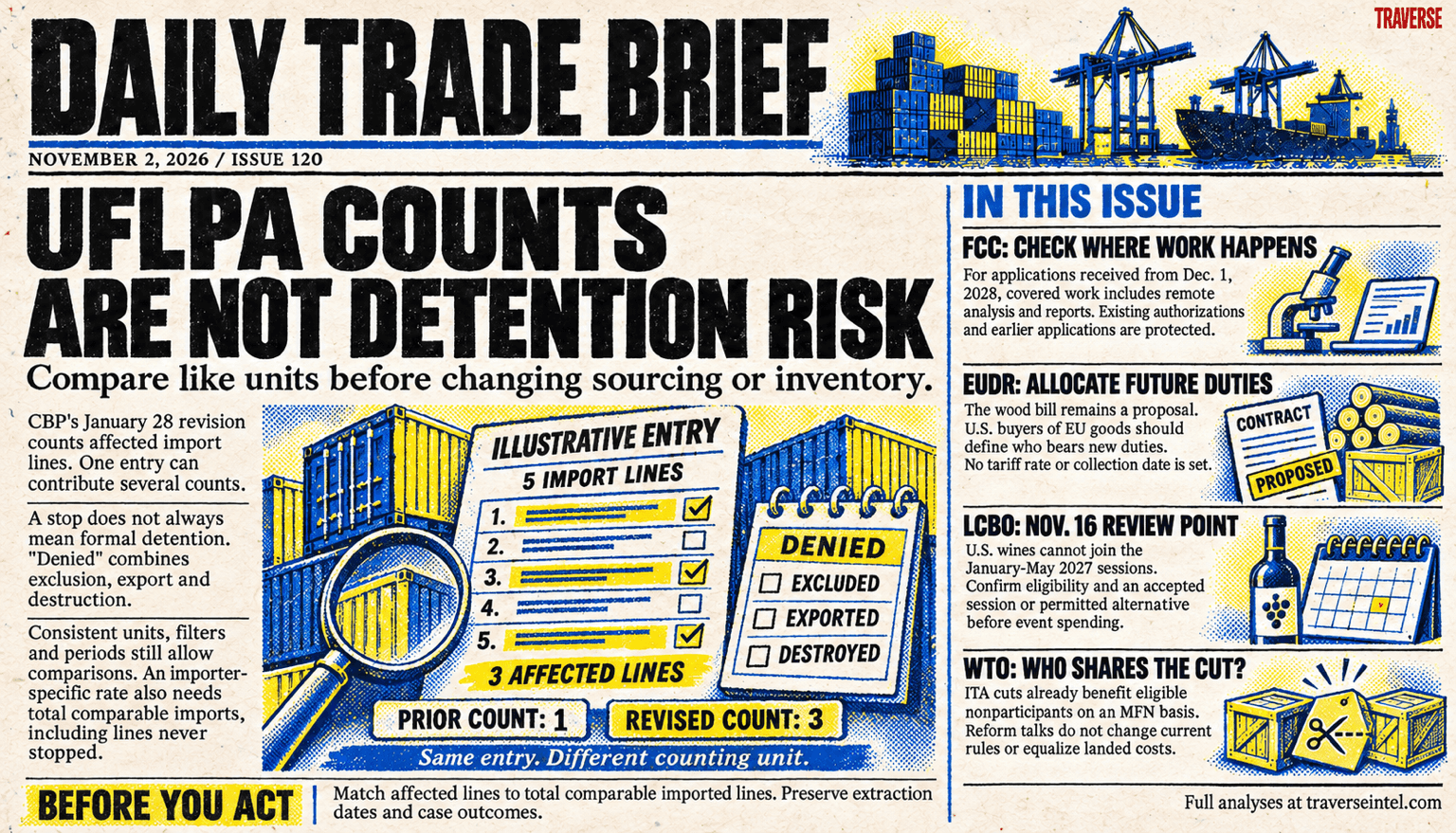
Before changing sourcing or inventory buffers, importers should compare affected lines with their own comparable import volumes and separate stops from formal detentions. Dashboard totals alone do not establish the probability that their next shipment will be stopped.
DHS's October 29 UFLPA Entity List additions give importers a fresh supplier-screening task. Interpreting enforcement trends requires a separate check of CBP's dashboard methodology, whose counting revision dates to January 28.
CBP's revised dashboard counts affected import lines, and a stop does not necessarily mean formal detention. Its Denied category combines exclusion, export and destruction, while comparisons within the revised series remain possible using consistent units, filters and periods. To estimate their own intervention rate, importers need affected lines and comparable total imported lines, including those never stopped. Preserve extraction dates and case outcomes before using a trend to change sourcing.
Read the full analysis: CBP's UFLPA Dashboard Counts Import Lines, Not Detentions.
For certification applications received on or after December 1, 2028, the FCC's laboratory restriction covers substantive work performed in non-reciprocal economies, including remote analysis and preparation or approval of test reports. Existing authorizations and earlier applications are protected from this change. Manufacturers awarding testing contracts should identify where each covered task will be performed and require notice of relevant staffing or subcontractor changes. Ministerial administration and qualifying research or pre-compliance work remain outside the restriction.