U.S. tariff cuts on Canada can raise customs value under fixed duty-paid pricing
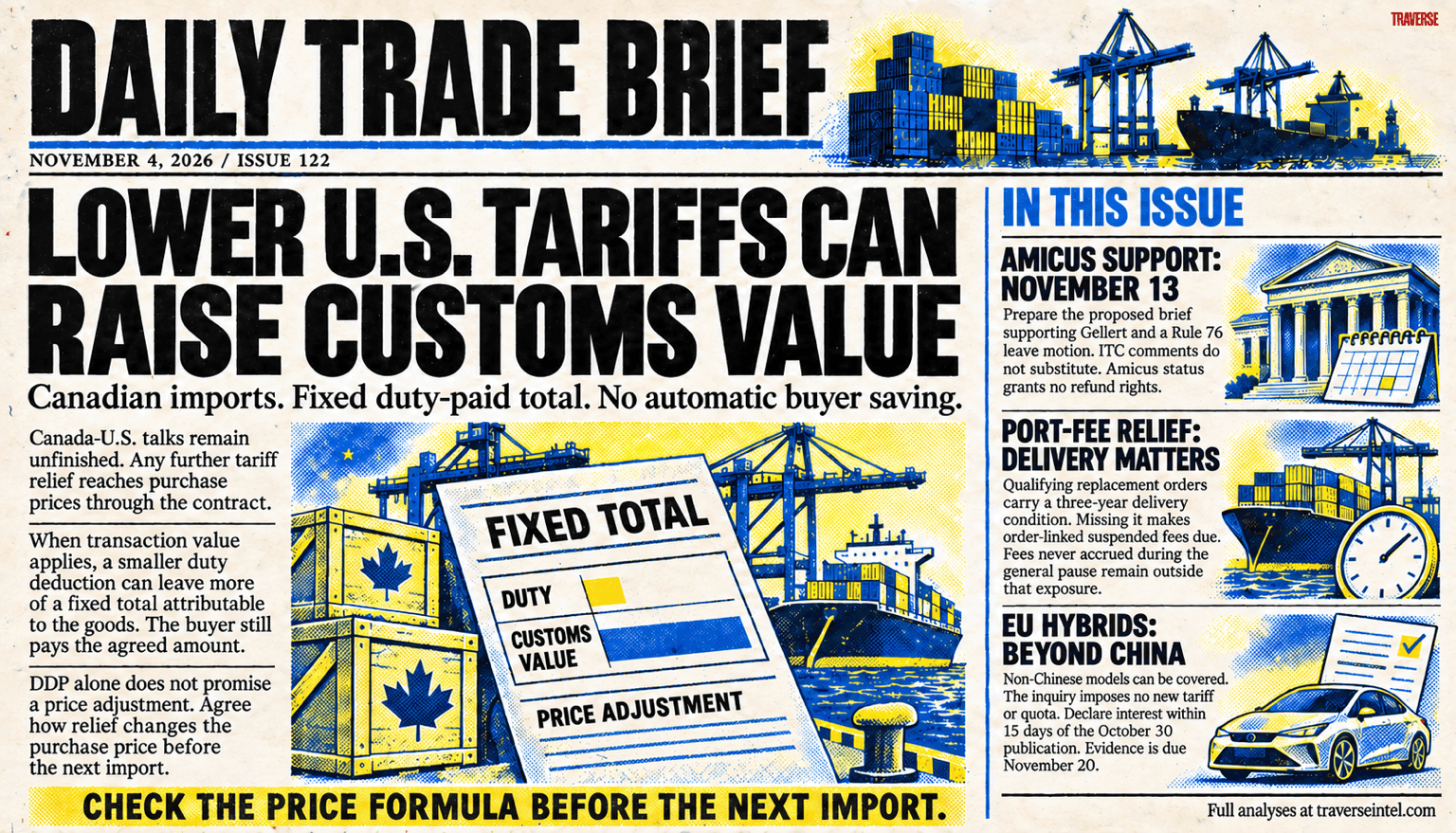
U.S. buyers of Canadian goods should check whether the contract fixes the duty-paid total or lets duties adjust. If they want future tariff relief reflected in the price, agree the adjustment formula before the next import.
Mark Carney said on November 3 that Canada-U.S. trade talks had progressed but remained unfinished. If further tariff relief follows, a fixed duty-paid price can leave the U.S. buyer paying the same total while the customs value rises.
Under transaction value, a lower duty rate can raise customs value when the total duty-paid price stays fixed and the duty deduction falls. The buyer still pays the agreed total, and the higher customs value does not establish the seller's profit. DDP alone neither fixes the price nor promises a tariff adjustment. Before future imports, reconcile the purchase order, actual payment and supported deductions, then agree how applicable relief would change the purchase price.
Read the full analysis: Canada Tariff Cuts Can Raise the Customs Value of Fixed-Price Imports.
Amicus briefs supporting Gellert's summary-judgment motion in the Canada Section 338 case are due November 13, ahead of oral argument on January 20, 2027. An association seeking to support the motion should prepare its proposed brief and a motion for leave under CIT Rule 76, identifying its interest and why its contribution would assist the court. Separate ITC comments due November 9 do not substitute for that filing. Amicus participation requires the court's permission and does not confer plaintiff status or refund rights.