BIS rule can require licenses for chip use after lawful delivery
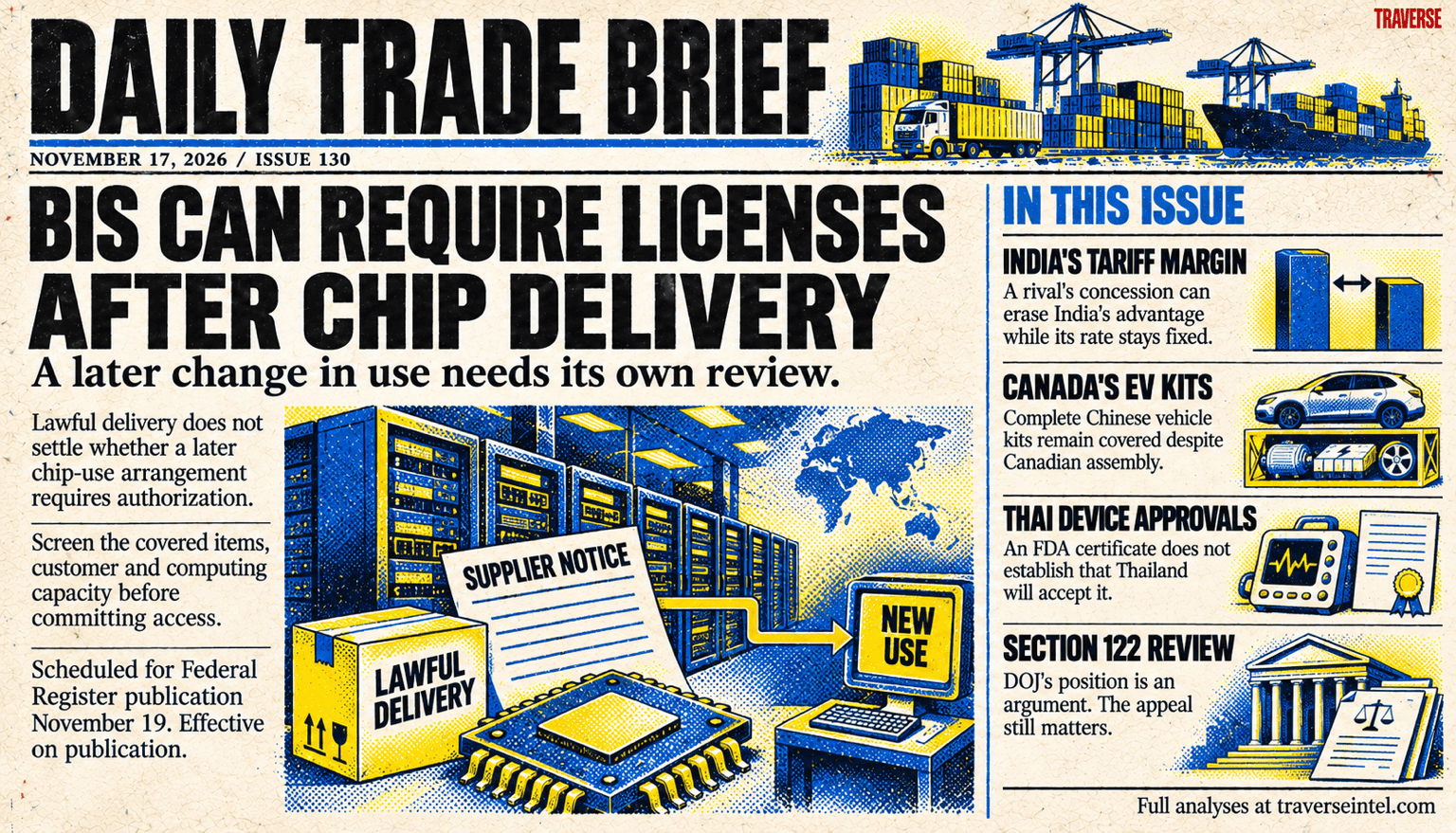
Overseas data center operators should screen proposed customer access against the rule's item, customer and computing-capacity conditions before committing capacity. Retain the original delivery basis and any required supplier notice, and determine whether the proposed use needs authorization.
BIS's remote access rule is scheduled for Federal Register publication on November 19 and takes effect on publication. A covered change in chip use can require authorization even after lawful delivery.
The new control covers specified EAR-controlled items used to supply more than 12 million aggregate total processing performance (TPP) to or for a company headquartered in Macau or a Country Group D:5 destination, or whose ultimate parent is headquartered there, through a single data center or linked centers. For covered license-free deliveries on or after the effective date, suppliers must notify recipients that the party making a covered change in use must obtain the required authorization. The supplier notice communicates an obligation created by the rule.
Read the full analysis: BIS Remote Access Rule Can Require Licenses After Lawful Chip Delivery.
India's negotiated U.S. tariff rate can stay fixed while a rival's lower rate erases or reverses India's competitive margin. Matching a rival's concession would restore parity, not preserve a positive advantage. Sourcing teams should model both outcomes and look for an expressly protected tariff gap and adjustment mechanism in the final agreement. The public framework does not establish either for later concessions to third countries.