BAD DEAL Act Would Remove Scheduled U.S. Bans on Canadian Goods and Section 338 Duties
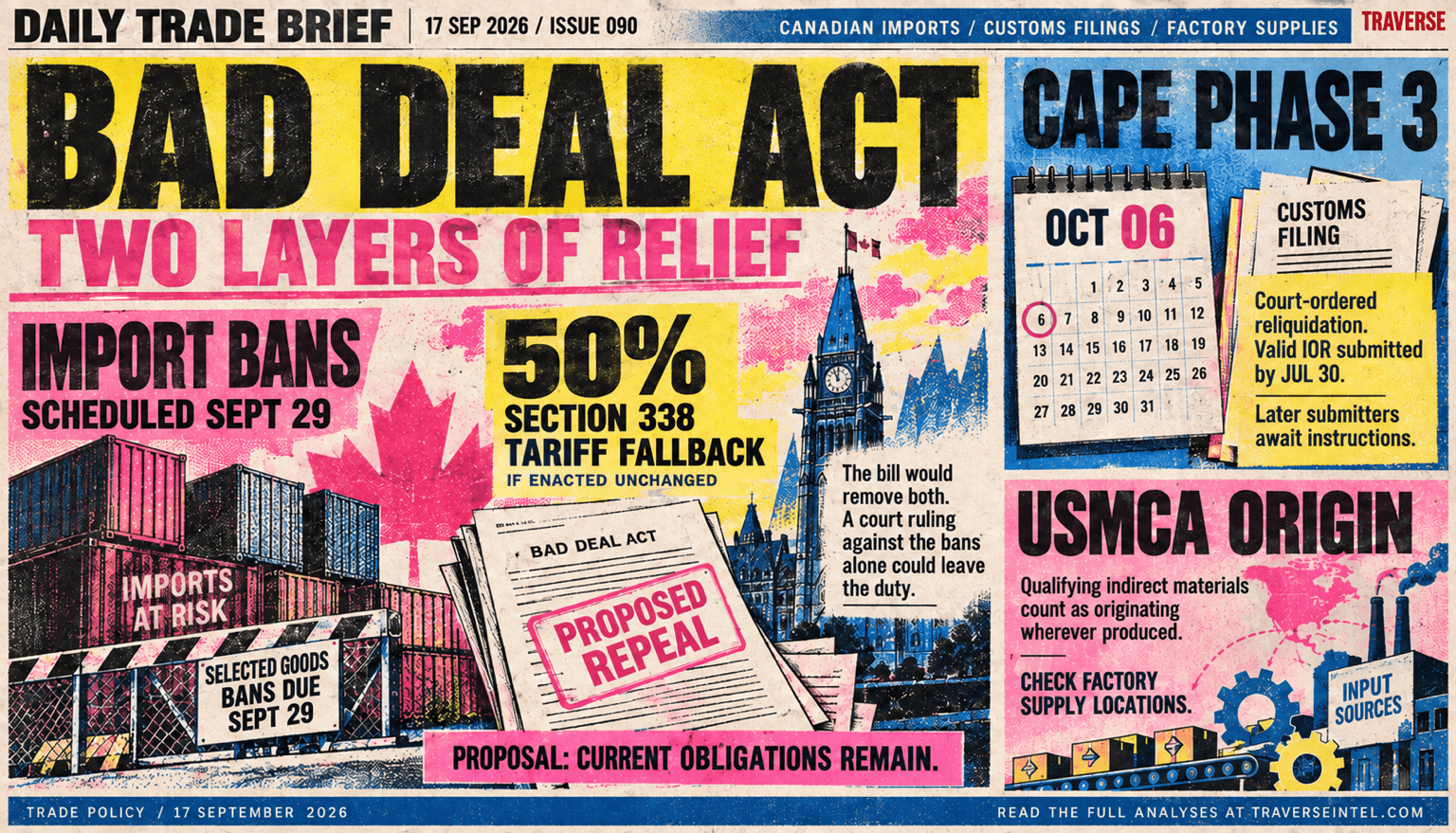
If enacted unchanged, the BAD DEAL Act would remove both the scheduled U.S. import bans and the underlying Section 338 tariff measures. A ruling against the bans alone could leave the 50% duty applicable.
Canadian supply planning now has a September 29 import-ban date to work around. This edition also covers the evidence needed for CAPE's October 6 opening and a limit of using USMCA origin status to assess factory dependencies.
The BAD DEAL Act would repeal Section 338 and nullify proclamations issued under it, reaching both the bans scheduled for September 29 and the underlying tariff measures. If a court invalidates only a ban while the original tariff remains legally operative, the affected import would face the 50% duty, subject to the order's terms. The proposal changes no current obligations. Match Canadian purchase lines to the proclamation annexes and planned importation dates, then assess any legislative or court relief alongside remaining duties and entry requirements.
Read the full analysis: BAD DEAL Act Would End U.S. Bans on Canadian Goods and the 50% Tariff Fallback.
CBP plans to open CAPE Phase 3 on October 6 for finally liquidated entries covered by court-ordered reliquidation. Initial filing access is limited to plaintiffs that submitted a valid importer of record number to CBP by July 30. Later submitters will receive additional instructions, with no later opening date specified. The declaration does not describe July 30 as a deadline extinguishing refund claims. Before scheduling a filing, reconcile counsel's actual IOR submission with the court order and entry list. Opening-day access does not establish entry acceptance or a refund payment date.