USMCA origin can preserve drawback despite Section 338 duties at entry
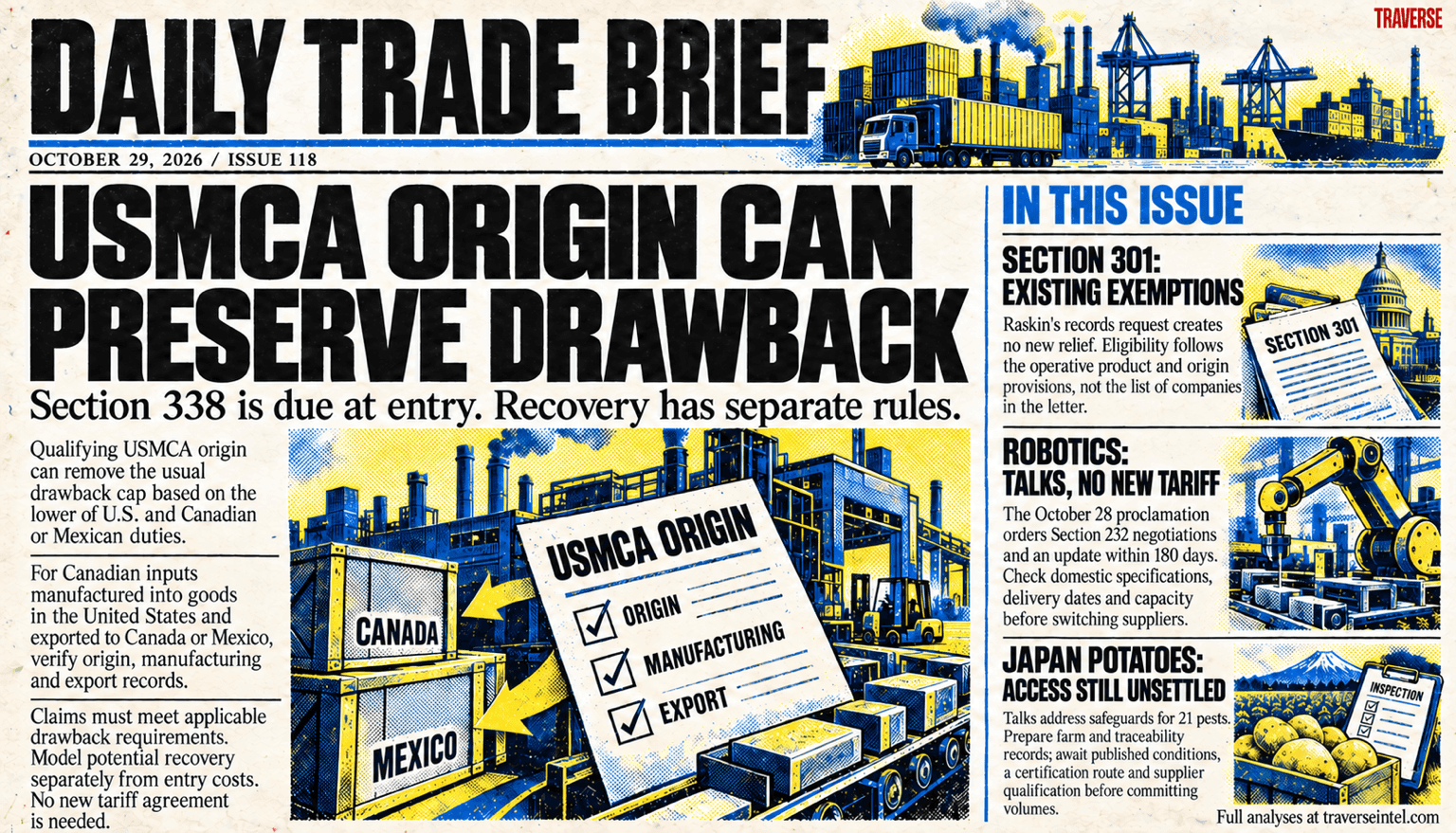
U.S. manufacturers using Canadian inputs in goods exported to Canada or Mexico should verify USMCA origin and manufacturing drawback requirements before estimating recoverable Section 338 duties. The existing recovery route does not depend on a new tariff agreement.
The October 30 changes to Section 338 coverage require U.S. manufacturers to revise entry costs for affected Canadian inputs. For goods manufactured in the United States and exported to Canada or Mexico, a separate drawback review can identify recoverable duties under existing rules.
USMCA origin does not exempt covered Canadian inputs from Section 338 at entry, but it can remove the usual drawback limit based on the lower of U.S. and Canadian or Mexican duties. A claim still requires evidence of qualifying origin, manufacturing and export, and compliance with the applicable drawback requirements. Model potential Section 338 recovery separately from the duty payment at entry and from other applicable charges.
Read the full analysis: USMCA Origin Can Preserve Drawback on Section 338 Tariffs.
Raskin's October 28 records request scrutinizes existing forced-labor Section 301 exemptions. It creates no new relief. Eligibility follows the operative product and origin provisions, so companies outside the letter can benefit and named companies must still establish that their goods qualify. Trade counsel should map shipments to those provisions and distinguish receiving relief from evidence of involvement in securing it.
Read the full analysis: .